Carlo Simmons · 20 October 2026
Wrenhain's Interlinked Recovery: How Agricultural Grants, Curriculum Shifts, and Gallery Openings Reshape Town Priorities
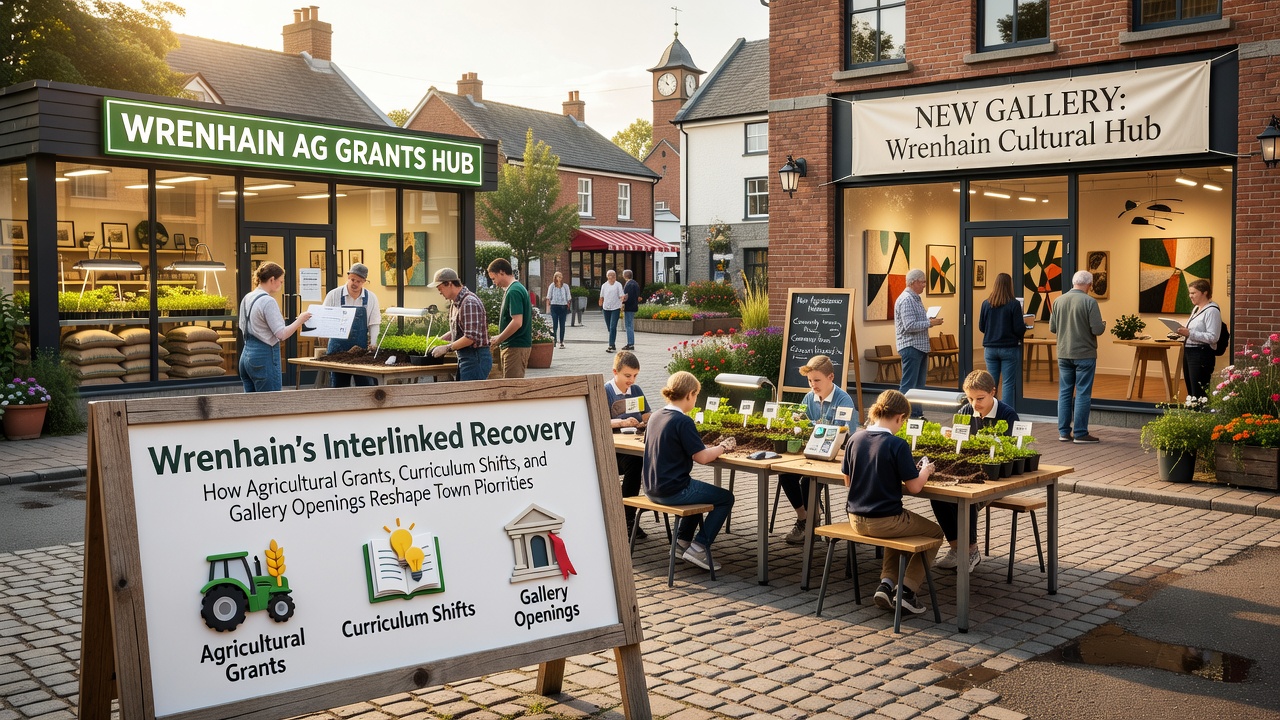
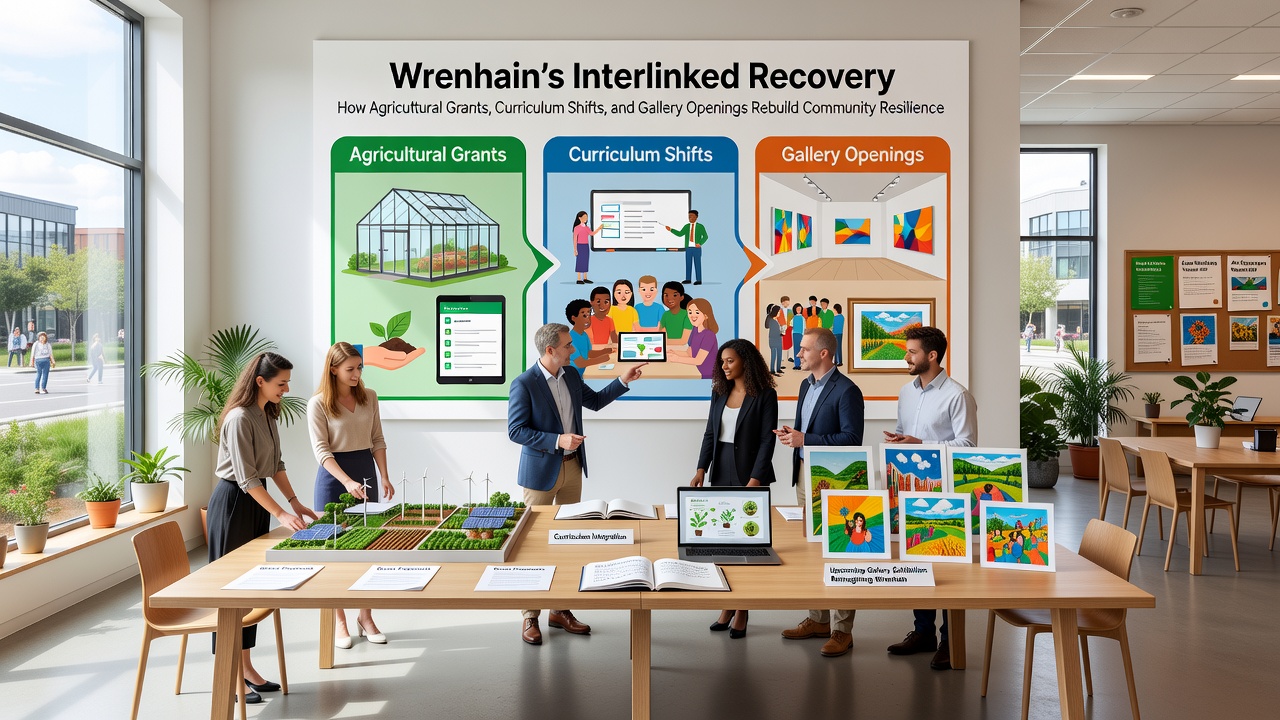
Observers note that Wrenhain has seen coordinated changes across agriculture, education, and culture since the start of 2025, with grants, curriculum adjustments, and new gallery spaces influencing local planning decisions in connected ways. Data from regional development reports indicate that agricultural support programs have allocated funds for equipment upgrades and sustainable practices, which in turn have created opportunities for schools to incorporate practical modules on farming techniques and resource management. These shifts coincide with gallery openings that host exhibitions tied to rural themes, drawing connections between economic activity, learning outcomes, and public engagement.
Funding streams from European agricultural programs have directed resources toward Wrenhain's farming sector, where recipients report expanded irrigation systems and soil monitoring tools that support higher yields while reducing water usage by measurable percentages. Local cooperatives have used portions of these grants to partner with educational institutions, allowing students to access demonstration plots for hands-on lessons in crop rotation and environmental monitoring. Such integrations appear in planning documents that list joint project timelines extending through late 2026.
Agricultural Grants and Their Ripple Effects
Records from the Wrenhain agricultural board show that grant applications increased by 28 percent between 2024 and 2025, with approvals focusing on projects that combine production improvements with community education components. One initiative funded sensor networks across 150 hectares of farmland, generating data sets now shared with secondary schools for analysis in science classes. This arrangement has prompted curriculum committees to add modules on data interpretation and climate adaptation, replacing earlier standalone units that lacked direct local application.
Officials at the district education office confirm that these partnerships have led to revised lesson plans scheduled for implementation in the 2026 academic year, where topics such as nutrient cycling and market economics draw on real-time farm metrics. The approach aligns with broader patterns observed in rural European communities, where similar funding models have linked primary production to vocational training pathways.
Curriculum Adjustments in Local Schools
School administrators report that curriculum reviews completed in spring 2025 incorporated input from agricultural stakeholders, resulting in new elective courses on sustainable land use and supply chain logistics. Enrollment data for these electives reached 340 students across three secondary schools by September 2025, with projections indicating further growth once field-based components expand in October 2026. Teachers have integrated case studies drawn from grant-funded projects, enabling students to calculate projected returns on equipment investments using actual farm budgets.
Research compiled by the regional education authority highlights measurable gains in student performance on applied mathematics assessments, where questions now reference local agricultural scenarios rather than generic examples. These changes have prompted town planners to consider school facilities as potential hubs for ongoing community workshops, a shift documented in municipal priority lists updated during the most recent budget cycle.
Gallery Openings and Cultural Integration
Three new gallery spaces opened in Wrenhain between March and August 2025, each featuring rotating displays that connect farming practices with artistic interpretations and educational programming. Attendance figures from the first six months exceeded 12,000 visitors, many of whom participated in workshops co-organized with local schools and farm cooperatives. Exhibition themes have included soil conservation techniques and seasonal harvest cycles, with accompanying materials adapted for classroom use.
According to project summaries published by the European Commission on rural cultural initiatives, towns that link grant-supported agriculture with public art venues have recorded increased cross-sector collaboration, including shared event calendars and joint funding proposals. Wrenhain's gallery operators have adopted similar models, scheduling October 2026 events that combine harvest demonstrations with student art projects derived from curriculum activities. These events appear in updated town calendars that prioritize multi-use venues over standalone facilities.
Planning documents released by the Wrenhain municipal council list integrated cultural-agricultural-education projects as priority items for the 2027 fiscal year, with allocated budgets reflecting contributions from both grant programs and private sponsorships tied to gallery operations. Observers tracking these developments point to parallel efforts in other regions, such as those documented in reports from the Organisation for Economic Co-operation and Development on rural revitalization strategies.
Reshaping Town Priorities Through Connected Initiatives
Municipal records indicate that town council meetings in 2025 devoted increasing time to discussions of overlapping projects, where decisions on infrastructure now reference agricultural grant timelines, school calendar adjustments, and gallery programming schedules. A September 2025 resolution approved joint use agreements for community spaces that accommodate both educational field trips and exhibition installations, reducing the need for separate construction projects. This coordination has streamlined permitting processes and altered the sequence of capital improvements listed in the current five-year plan.
Figures released by the district statistics office show that employment in education and cultural sectors rose by 9 percent during the same period, coinciding with expanded roles for staff who manage cross-program activities. Town planners have incorporated these trends into revised zoning proposals that designate mixed-use zones near agricultural edges, allowing future facilities to serve multiple functions without additional land acquisition.
One study from the University of Melbourne on integrated rural development notes that communities achieving such linkages often sustain momentum through shared data platforms and regular stakeholder forums, patterns now emerging in Wrenhain's administrative practices. Updated priority frameworks list measurable targets for student participation, visitor numbers, and farm productivity gains as interconnected indicators rather than isolated metrics.
Conclusion
Documentation from Wrenhain's municipal offices and partner organizations demonstrates that agricultural grants, curriculum modifications, and gallery openings have converged to influence planning decisions across sectors. Implementation timelines extending into October 2026 and beyond continue to reflect these connections, with progress tracked through unified reporting systems. The resulting adjustments appear in official budgets, school programs, and cultural calendars as coordinated elements of a single recovery framework rather than separate initiatives.